

Blog
What Is the Masonic Apron Meaning in Freemasonry?

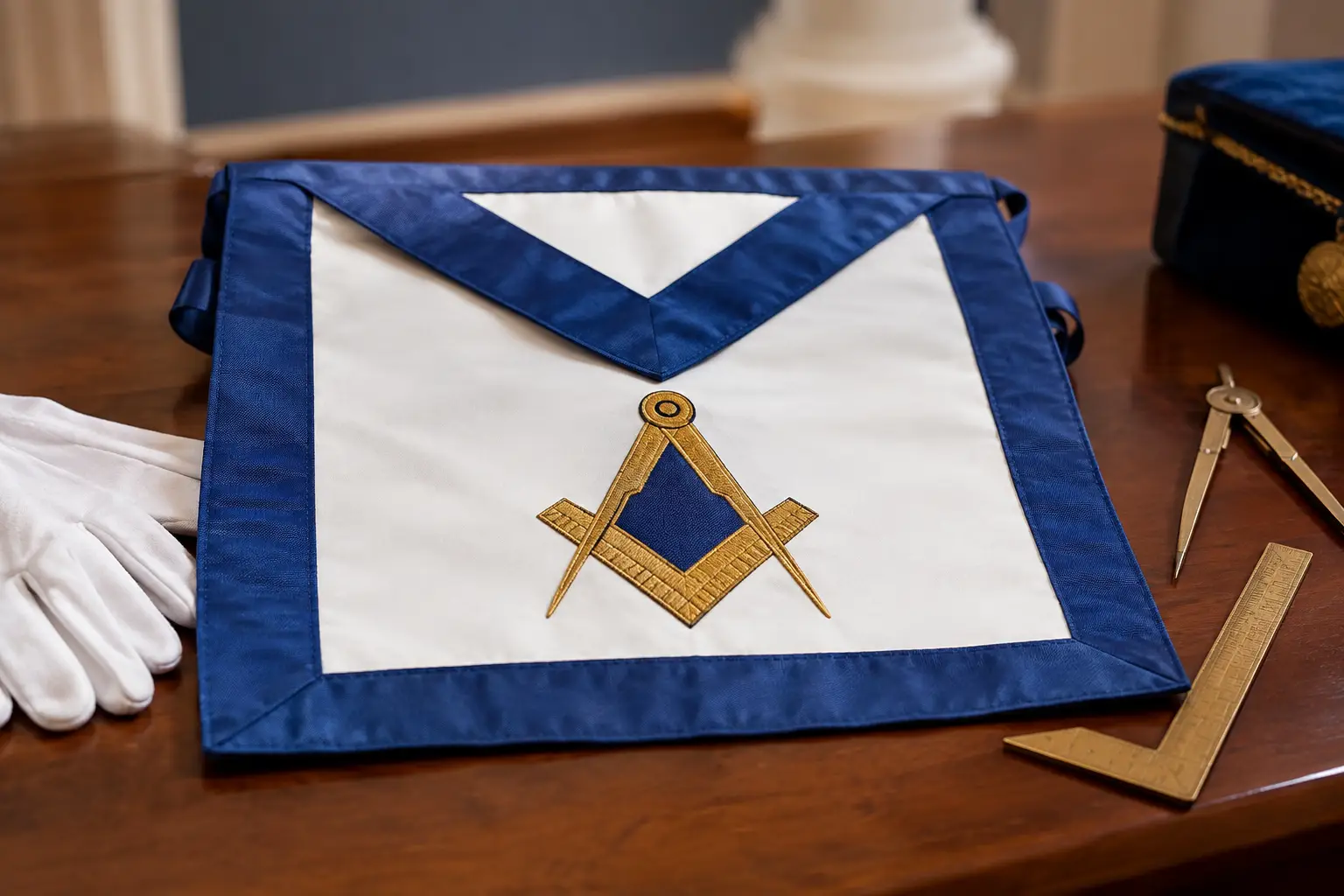
A Masonic apron is one of the first things many people notice when they visit a Lodge or see photographs of Freemasons in ceremonial dress. The masonic apron meaning is straightforward at its heart: it is a visible reminder that a Mason’s character, conduct, and service to others matter more than status, wealth, or occupation.
Often made of white lambskin and worn during Lodge meetings, the apron is not a costume or an attempt to imitate a profession from the past. It is a symbolic garment with roots in the practical working clothing of stonemasons. Over centuries, it has become a personal emblem of the values Freemasonry asks its members to practice in everyday life: integrity, friendship, respect, and service.
From a Working Tool to a Moral Symbol
The earliest stonemasons wore aprons for a practical reason. Cutting, dressing, and setting stone was demanding work, and a sturdy leather apron protected clothing and the body from rough materials and tools. In the medieval building trades, an apron also identified someone as a worker who had learned a craft and accepted its standards.
Freemasonry retains the language and imagery of those historic crafts, even though modern Freemasons are not required to be stonemasons. Its ceremonies use the building of a structure as a way to think about building a life. Stone becomes a symbol of character. Tools become reminders of self-discipline, fairness, and thoughtful action. The apron carries the same idea forward: honorable work is not merely what a person does for a living, but the continuing work of becoming dependable, kind, and useful.
That connection matters because Freemasonry does not present good character as an abstract ideal. Members are encouraged to bring its principles into family life, work, friendships, and their wider communities. The apron is worn in the Lodge, but its message is meant to travel well beyond it.
The Masonic Apron Meaning Begins With Equality
At the beginning of a Freemason’s journey, the apron is typically plain and white. Its simplicity is deliberate. It reminds every new member that, within the Lodge, people meet on equal ground.
Lodges bring together men of different ages, backgrounds, professions, and experiences. A member may be a teacher, tradesperson, veteran, business owner, student, or retiree. Outside the Lodge, those differences can shape how people are perceived. Inside it, the apron helps set aside the outward signs of social position and places attention on shared obligations and mutual respect.
This does not mean that experience or responsibility are ignored. Lodges have officers, and members may take on leadership roles as they gain knowledge and confidence. Rather, it means that leadership is understood as service, not privilege. A senior member still has duties to his fellow members, and a new member is welcomed as a Brother whose voice and welfare matter.
For someone considering membership, this is one reason the apron remains meaningful. It represents belonging without requiring people to be alike. Freemasonry values individual conscience and diverse life experience while asking members to meet one another with courtesy and goodwill.
Innocence, Integrity, and Personal Accountability
The white apron is traditionally associated with innocence. In a modern setting, that word can sound as though it means never making mistakes. Freemasonry uses it differently. The symbol points toward sincerity of purpose and an honest effort to live rightly.
No Mason is expected to be perfect. Members, like everyone else, face pressure, uncertainty, family responsibilities, and difficult decisions. The point of the apron is not to declare that its wearer has completed the work of self-improvement. It is a reminder to continue it.
That is why the apron has a quiet but demanding meaning. Wearing it invites a member to consider whether his actions match his values. Is he keeping his word? Is he treating others fairly? Is he contributing time, skill, or resources when help is needed? Is he willing to learn from others and accept responsibility when he falls short?
These are not questions answered once during a ceremony. They are practiced over a lifetime. For many members, the regular sight of the apron creates a useful pause from the noise of daily life and returns attention to what deserves lasting care.
Why Aprons Change as Members Progress
You may see Masonic aprons with different colors, borders, rosettes, or other details. These variations generally reflect a member’s stage of membership, office held, or particular Masonic organization. They are part of an established visual tradition, not displays of personal wealth or fashion.
The precise appearance of an apron can vary by jurisdiction and by the ceremony being held. In many Lodges, a newly initiated member wears a plain white apron. As he progresses through the degrees and accepts further responsibilities, the design may change. Officers may wear aprons that identify the role they have been elected or appointed to fulfill.
The distinction is worth making: a more elaborate apron does not suggest that one Mason is more valuable than another. It signals a particular duty, level of experience, or place within the ceremonial life of the Lodge. In a healthy Lodge, the outward differences reinforce a shared commitment to serve, learn, and support one another.
This balance between continuity and local practice is part of Freemasonry’s character. There are common principles across the fraternity, but details of regalia and custom may differ. If you are visiting a Lodge or considering joining, asking respectfully about its aprons is entirely appropriate. Members are usually pleased to explain the public meaning of the traditions they value.
A Badge of Service, Not Secrecy
The apron is sometimes misunderstood because Freemasonry is often associated with mystery. In reality, its purpose is not to conceal identity or create distance from the public. It is a ceremonial symbol worn during formal Masonic occasions, much as other longstanding civic, academic, military, and faith traditions use distinctive dress to mark an occasion and a responsibility.
Freemasons do have private ceremonies, but the values represented by the apron are not hidden. They are visible in the fraternity’s charitable work, community involvement, support for one another, and efforts to help members grow in confidence and character.
The apron also carries a traditional expression that it is a badge of a Mason. A badge identifies a commitment. It says, in effect, that the wearer has accepted standards and wishes to be judged by them. That can be a serious promise in an age when many people are looking for friendship with purpose, practical opportunities to serve, and a community that encourages them to become better neighbors and citizens.
What the Apron Can Mean to a Modern Member
For a newly initiated Mason, receiving an apron can be a memorable moment because it makes membership tangible. The person is no longer simply reading about Freemasonry or attending an introductory conversation. He has begun a journey shared by generations of members before him.
For a longtime member, the same apron may carry memories of mentors, friendships, Lodge events, charitable efforts, and personal milestones. Its value is not in the material from which it is made. Its value grows through the life lived while honoring what it represents.
That is also why the apron should not be reduced to a historical curiosity. Its origins in the stonemasons’ trade are significant, but its continued relevance lies in the question it asks of each wearer: what are you building in yourself, and how are you helping build a stronger community around you?
The Masonic apron is a small object with a lasting purpose. It asks members to wear their principles with humility, to treat others as equals, and to make service a regular part of life. For those seeking a community grounded in friendship and character, that message remains as practical now as it was centuries ago.