

Blog
Why Do Freemasons Keep Rituals Private Today?

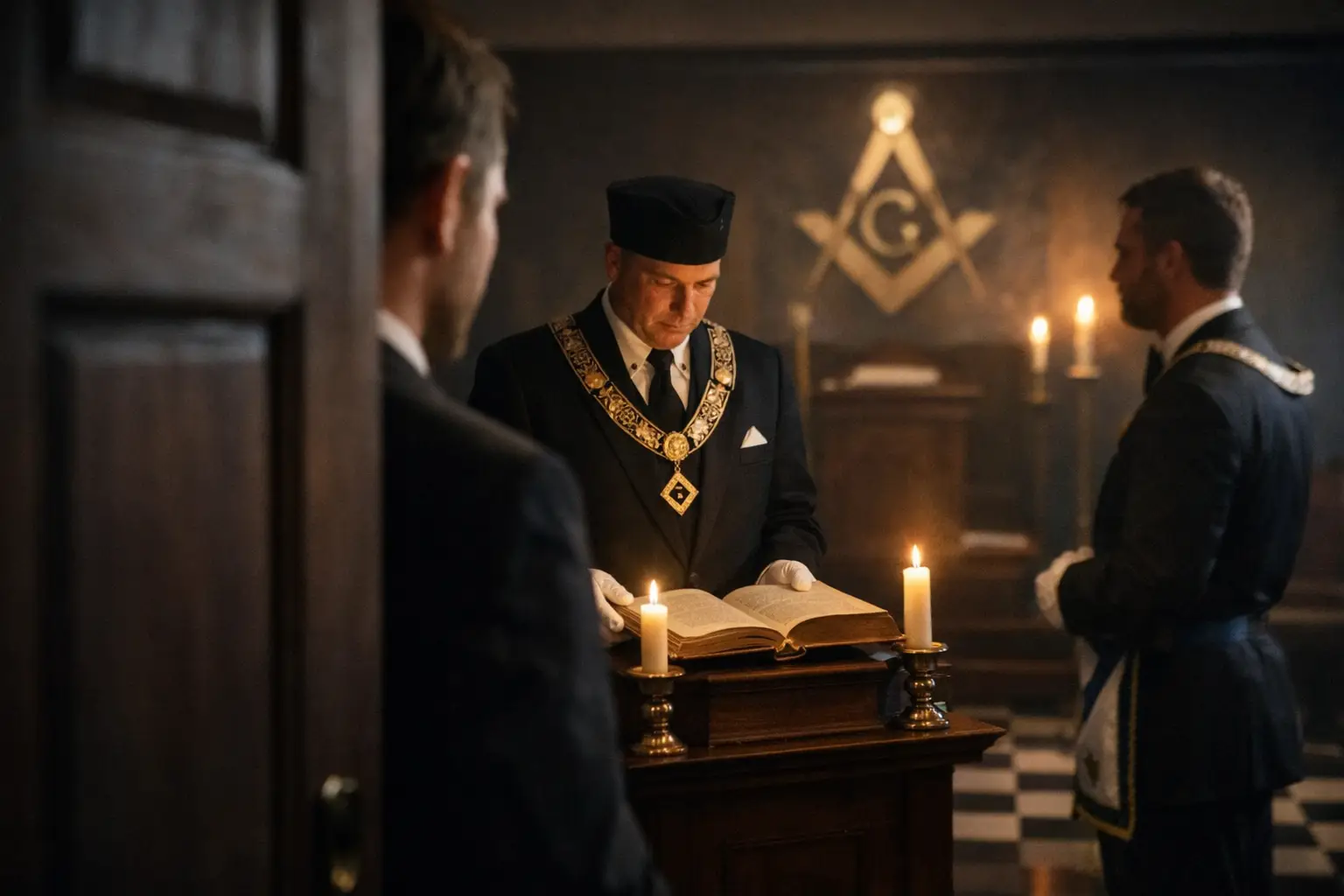
A candidate entering a Lodge for the first time is not meant to be an audience member. He is invited to take part in an experience shared by generations of members before him. That is the clearest answer to the question, “why do freemasons keep rituals private?” The privacy protects the experience of taking part, rather than concealing Freemasonry’s purpose.
Freemasonry is open about its central principles: Integrity, Friendship, Respect, and Service. It is also clear about the place ritual holds in Lodge life. What is kept private are the particular words, signs, and sequence of ceremonial work through which members reflect on moral responsibilities and make commitments to one another.
Why Do Freemasons Keep Rituals Private?
Masonic ritual is private because it is participatory. Like a graduation ceremony, a religious service, or a family tradition, its effect depends partly on encountering it in its proper setting and at the appropriate moment. Knowing every detail in advance can change what a person notices, feels, and learns when he first takes part.
This does not mean that the ideas behind the ritual are hidden. Freemasonry has long described its purpose in public: to encourage good character, strengthen friendships, support charitable causes, and help members contribute positively to their communities. The organization’s history, charitable work, meeting places, membership pathway, and values can all be discussed openly.
The distinction matters. Privacy is a boundary around a shared member experience. Secrecy suggests an attempt to hide harmful conduct or avoid public scrutiny. Freemasonry should be judged by what it teaches and does in the world: how it treats its members, supports communities, gives to charity, and lives by its stated principles.
Ritual gives shared values a memorable form
Words such as integrity, kindness, duty, and respect are familiar. The challenge is putting them into practice when life is busy, relationships are difficult, or a community needs help. Masonic ceremonies use traditional language, symbolism, and carefully structured participation to give those values a form that members can remember.
A ritual is not a test of secret knowledge for its own sake. It is a method of instruction. Its symbols encourage members to consider how they use their time, keep their promises, treat others fairly, and improve themselves over a lifetime. Different people will take different lessons from the same ceremony, which is one reason the experience is meant to be encountered rather than simply read as a script.
Freemasonry has preserved this approach for more than 300 years because it offers continuity. A member can sit in Lodge with people of different ages, backgrounds, occupations, and opinions, then take part in a familiar pattern that emphasizes their common responsibilities. That shared structure can build trust without requiring everyone to share the same life story.
Privacy creates equality inside the Lodge
In ordinary life, status can enter a room before a person does. Job titles, wealth, social connections, and public recognition can shape how people are heard. In a Lodge, members meet on equal terms. Ritual supports that principle by giving each participant a defined role and asking everyone to respect the same rules.
The private setting also allows members to focus. A ceremony is not performed for applause, social media, or public debate. It is conducted for the members present and for the values they are considering together. That atmosphere can be especially meaningful for men seeking thoughtful friendship and a regular space for reflection away from professional pressures.
Privacy also carries an obligation. Members are expected to treat what is shared in Lodge with care, just as they would protect a friend’s confidence. That does not excuse poor behavior, nor does it place Freemasonry above the law. A commitment to discretion must always sit alongside accountability, respect, and responsible governance.
What Freemasonry Shares Openly
A private ritual does not make Freemasonry unknowable. Public information is available about its history, organization, charitable activity, values, and membership. Freemasons’ Hall, Lodge events open to visitors, educational programs, museums, archives, and conversations with members all offer ways to understand the organization without becoming a member.
Freemasonry is one of the oldest secular social and charitable organizations in the world. Its modern development is closely connected with the publication of the 1723 Constitutions, a landmark document in its early governance and public identity. Over centuries, Lodges have brought people together around fellowship, self-improvement, and service.
Members also speak publicly about why they joined. Some value the friendships formed across generations and professions. Others appreciate a regular commitment to charitable fundraising and volunteering. Many find that the ceremonial tradition gives a sense of occasion and continuity that is increasingly rare. These are not hidden motives. They are part of the everyday life of many Lodges.
Freemasonry is nonpolitical and nonsectarian. Members may hold strong personal views and different religious beliefs, but Lodge meetings are not intended as arenas for partisan argument or religious division. The aim is to create a respectful setting in which people can work together despite differences.
What is private, and what is not
The line is fairly straightforward. The details of ceremonies, including modes of recognition and certain traditional wording, are reserved for members. Personal matters shared by fellow members should also be treated with confidence.
Freemasonry’s values, charitable aims, leadership structures, rules, public events, and expectations of conduct are not private in the same sense. Nor are its members required to hide that they are Freemasons. Many do so openly, particularly when raising funds, volunteering, welcoming visitors, or explaining what Lodge life has meant to them.
Practices can vary by country and jurisdiction, so the form of a meeting may not be identical everywhere. Yet the underlying reason for ritual privacy is broadly consistent: preserving a meaningful, respectful experience for those who choose to undertake it.
Does Ritual Privacy Create Misunderstanding?
It can. When an organization uses symbols and private ceremonies, people naturally ask questions. Sometimes those questions arise from genuine curiosity; sometimes they are shaped by rumors, fictional portrayals, or old conspiracy theories. The best response is neither defensiveness nor vague reassurance. It is clear information, offered with patience.
Freemasonry does not ask the public to accept claims without evidence. Its charitable giving, community activity, historic records, and public-facing institutions demonstrate much of what it is. At the same time, it asks people to recognize that not every meaningful human experience needs to be broadcast in full to be legitimate.
There is a trade-off. Greater public explanation can reduce unnecessary mystery, while revealing every ceremonial detail can reduce the sense of discovery for future candidates. A healthy balance means being transparent about purpose, standards, and conduct while preserving the personal impact of the ceremony itself.
For someone considering membership, the right question may be less “What are they hiding?” and more “What kind of person and community do I hope to become part of?” A conversation with a Freemason can answer practical questions about meetings, time commitments, charitable involvement, and the path to joining. It can also make clear that ritual is only one part of a wider life of friendship and service.
Privacy in Freemasonry is not a wall built to keep good people out. It is a tradition of care around a shared experience, maintained so that each new member can meet it for himself, among people committed to helping one another live with purpose.