

Blog
How Much Does Freemasonry Cost? A Clear Guide

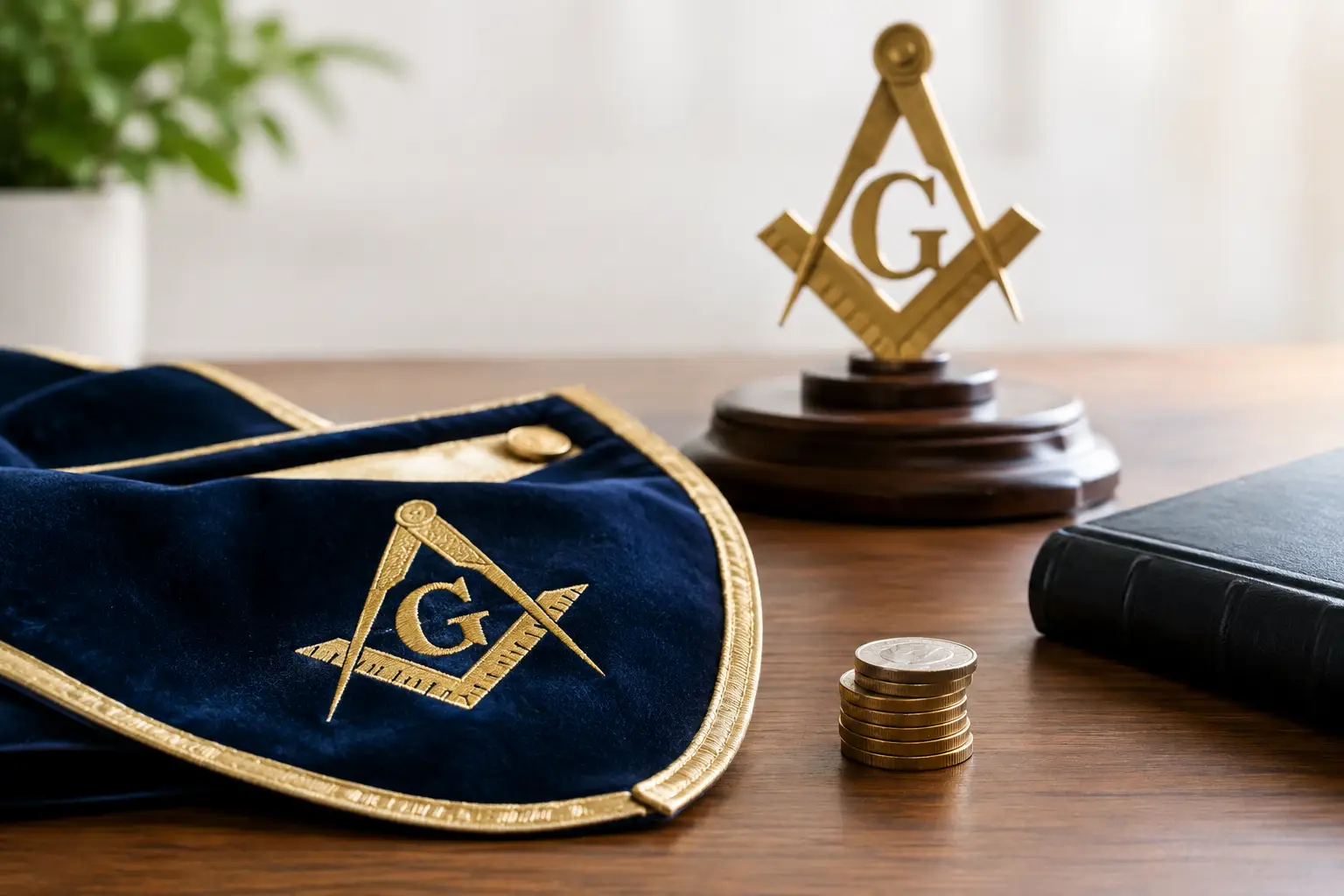
A prospective member’s first practical question is often, “how much does Freemasonry cost?” It is a sensible question. Freemasonry is built on friendship, self-improvement, and service, not on excluding people through unnecessary expense. Still, membership involves real costs, and the clearest answer is that there is no single national price.
A Lodge’s fees depend on its jurisdiction, location, premises, and traditions. In the United States, Grand Lodges and individual Lodges set their own arrangements. A Lodge in a major city with a historic building and formal dinner program may have different costs from a smaller rural Lodge that meets more simply. The best approach is to ask the Lodge directly for a written outline of expected first-year and annual expenses before you apply.
What does Freemasonry cost to join?
The cost of joining normally has two parts: a one-time initiation or joining fee, and annual dues. The joining fee helps cover the administrative and ceremonial costs of welcoming a new member. Annual dues support the Lodge’s ongoing work, including its meeting place, Grand Lodge assessments, insurance, communications, and local activities.
In some Lodges, the first year costs more because it includes both the joining fee and the first year’s dues. Other Lodges spread certain costs across the year or include selected items in the initial payment. There is no standard figure that applies everywhere, so broad estimates found online can be misleading.
A Lodge should be straightforward about what is included. Before making any commitment, ask whether the quoted amount covers your initiation, annual dues, meals, regalia, Grand Lodge fees, and any other expected charges. Clear expectations are part of a respectful membership experience.
Why costs vary between Lodges
Freemasonry has a shared moral purpose and long-established traditions, but it is organized locally. Each Lodge has practical responsibilities shaped by its own circumstances. The condition and upkeep of a building, the cost of renting meeting space, the number of members, and the frequency of gatherings can all affect annual dues.
Dining traditions matter too. Some Lodges meet for a simple meal before or after a meeting. Others hold more formal dinners on particular occasions. A meal may be included in the evening’s charge, offered at an additional cost, or organized as an optional social event. None of these approaches is more “Masonic” than another. They simply reflect the character of a particular Lodge and its members.
The usual costs to ask about
When considering how much Freemasonry costs, it helps to separate required membership expenses from optional participation. A prospective member may encounter several categories over the course of a year:
- a one-time application, initiation, or joining fee;
- annual Lodge and Grand Lodge dues;
- meals or social events connected with meetings;
- basic regalia and clothing for Lodge meetings;
- travel, parking, or accommodation for special events; and
- voluntary contributions to charitable appeals.
Not every Lodge will have every expense, and the timing differs. For example, a Lodge may provide or lend basic regalia at first, while another may ask a new member to obtain it after joining. Some members choose to purchase additional regalia over time, but this should not be confused with a condition for becoming a Mason.
Regalia, meals, and other optional spending
Regalia is part of Freemasonry’s visual tradition. It marks a member’s place in a ceremony or office and connects present-day Lodges with generations of Masons who came before. For a new member, the practical requirement is usually modest. Ask what the Lodge supplies, what you may need to buy, and whether secondhand or loaned items are available.
Likewise, social spending should be considered honestly. Friendship is one of Freemasonry’s central values, and many members find that shared meals, family events, lectures, and charitable occasions are among the most rewarding parts of Lodge life. Yet participation should be guided by your circumstances. A healthy Lodge welcomes members for their character and companionship, not for how much they spend at events.
Some Lodges also organize visits to other Lodges, heritage events, or formal celebrations. These can be memorable opportunities to learn and meet members from beyond your own community. They are generally choices rather than hidden obligations. If regular travel or formal dining would not suit your budget, say so early. A good Lodge will explain its rhythm of life openly.
Are charitable donations required?
Service and charitable giving are fundamental to Freemasonry, one of the oldest secular social and charitable organizations in the world. Lodges often raise funds for local causes, disaster relief, medical research, youth programs, and Masonic charities. Members may be invited to support these efforts during the year.
An invitation to give is not the same as a requirement to give. The amount a member contributes beyond regular dues should be voluntary and proportionate to personal means. Freemasonry teaches generosity, but it also teaches responsibility. No one should feel pressured to make a donation that creates financial difficulty.
There is an important distinction here. Membership dues keep a Lodge functioning. Charitable donations support the good work a Lodge chooses to undertake. Both can reflect a member’s commitment, but they serve different purposes and should be explained separately.
What financial commitment should you expect?
Rather than looking for one universal number, think in terms of an annual budget. Begin with the Lodge’s joining fee and dues. Then consider whether you are likely to attend meals, purchase personal regalia, or join occasional social and charitable events. This gives you a more realistic picture than focusing only on the application fee.
It is also worth considering time alongside money. Lodge meetings, preparation for ceremonies, fellowship, and service projects require a regular commitment. For many members, that investment is part of the value: a dependable place to meet people of different backgrounds, develop confidence, and contribute to the community. But it should fit alongside work, family, and other responsibilities.
If your circumstances change after you join, speak to your Lodge secretary or another trusted officer. Lodges are communities, and long-standing members understand that careers, family needs, health, and finances can change. There may be practical ways to remain connected while managing a difficult period, depending on local rules.
Questions to ask before applying
A conversation with a Lodge should leave you with clarity, not uncertainty. Ask what the joining fee is, what annual dues cover, when payments are due, and whether meals are included. Ask about regalia, expected dress, special-event costs, and whether there are any regular assessments beyond annual dues.
It is equally reasonable to ask how the Lodge uses its funds. Responsible Lodges can explain that dues support their operations and that charitable fundraising is handled with care. Openness on finances reflects the same integrity expected of every member.
Do not feel that asking about cost signals a lack of commitment. It shows maturity and good judgment. Joining Freemasonry is not a purchase. It is a decision to take part in a community that asks its members to live by Integrity, Friendship, Respect, and Service.
The right Lodge will give you a plain answer, allow you time to consider it, and welcome you because of the person you are. If its financial expectations sit comfortably within your means, you can focus on what membership is truly meant to offer: enduring friendships, purposeful service, and a place to grow.