

Blog
What Freemasons Hall Tours Show Visitors

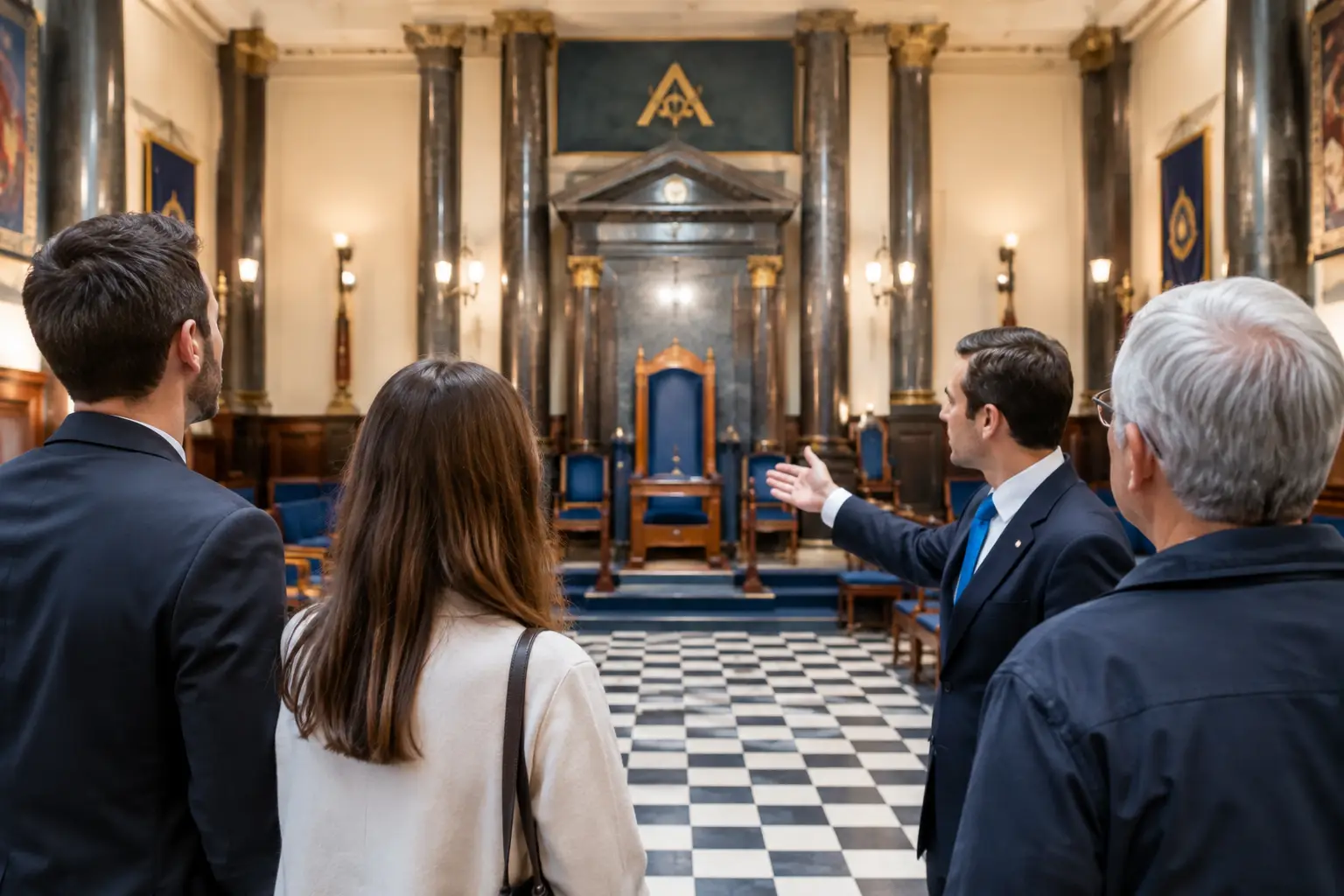
Freemasons Hall tours offer something rarer than a look inside a celebrated London building. They place visitors in the setting where a living tradition has been practiced, administered, and renewed for generations. For anyone curious about Freemasonry, the experience replaces secondhand impressions with architecture, history, and a clearer understanding of the values that guide its members.
Freemasons’ Hall stands in Great Queen Street, London, and serves as the headquarters of the United Grand Lodge of England. It is also home to a remarkable public museum and library collection. Although the building is closely associated with ceremony, it is not a relic behind glass. It remains a working home for Masonic meetings, charitable activity, research, and community.
Why Freemasons Hall tours are worth taking
The building itself is one reason to visit. Completed in the early 1930s, the present Freemasons’ Hall is one of London’s great Art Deco interiors. Its scale, geometric detail, mosaics, metalwork, and dramatic lighting reflect the period’s confidence in craftsmanship and design. Yet its purpose gives those details another layer of meaning.
The Hall was built as a memorial to Freemasons who gave their lives in the First World War. That context matters. The building is not simply impressive because it is ornate; it was created as a place of remembrance, fellowship, and shared responsibility. Visitors can see how a public expression of gratitude and service became part of the building’s very fabric.
A tour also helps distinguish Freemasonry from the myths that have gathered around it. Freemasonry has private ceremonies, as many longstanding membership organizations do, but it is not beyond explanation. Its history, charitable work, organizational structure, and guiding principles can be discussed openly. Seeing the Hall in person often makes that distinction easier to understand: tradition can be meaningful without being mysterious for its own sake.
What you may see inside Freemasons’ Hall
Tours vary according to the building’s calendar and which rooms are in use, so no visitor should expect access to every space on every date. Freemasons’ Hall is an active venue, and respect for meetings and events sometimes affects the route. That is part of an authentic visit rather than a limitation to be regretted.
The Grand Temple
For many visitors, the Grand Temple is the defining moment. It is an extraordinary ceremonial space, designed with rich symbolic decoration and a strong sense of occasion. Even guests with no prior knowledge of Masonic practice can appreciate the care taken in its design and the role it plays in bringing members together.
The room should not be mistaken for a church. Freemasonry is nonsectarian and does not replace a member’s faith. Rather, the Temple is a meeting place for ceremonies that encourage reflection on character, duty, integrity, and service. A guide can help visitors understand the purpose of the setting without turning the visit into a performance of private ritual.
Art Deco design with a human story
Throughout the Hall, visual motifs reward close attention. Materials, proportions, and symbolic forms were chosen to create a sense of permanence while celebrating skilled workmanship. This is fitting for an organization whose language and traditions draw inspiration from the tools and moral lessons of stonemasons.
The architecture is also a useful reminder that Freemasonry is about more than symbols. A square, compass, or carefully arranged room has meaning only when connected to conduct. Freemasonry asks members to practice integrity, friendship, respect, and service in ordinary life – with family, neighbors, colleagues, and the wider community.
The museum and library collections
The museum offers another perspective, particularly for researchers, educators, and visitors interested in social history. Its collections trace the development of Freemasonry over centuries through objects, regalia, documents, portraits, and material connected to lodges and individual members.
This is where broad historical claims become tangible. Visitors may encounter evidence of how lodges created spaces for friendship across social and professional backgrounds, supported charitable causes, and maintained traditions through periods of major change. The collections also demonstrate that there is no single Masonic story. Local lodges, members, families, and communities have each shaped the organization’s history.
What a visit can clarify about Freemasonry
A first visit to Freemasons’ Hall will not answer every question, nor should it. Freemasonry is experienced through participation in a lodge over time, not through a single building. Still, a tour can provide useful foundations for anyone considering membership or trying to understand a relative’s involvement.
It can clarify that Freemasonry is one of the oldest secular social and charitable organizations in the world, with a structure that combines local fellowship and wider shared standards. Lodges are where members build friendships, take part in ceremonies, organize charitable support, and develop confidence through contribution. The United Grand Lodge of England provides governance, continuity, and a connection among lodges, while local relationships remain at the heart of the experience.
It can also put Masonic symbolism in proportion. Symbols are teaching tools, not secret codes for power or influence. They encourage members to consider how they live: whether they act honestly, treat others fairly, keep commitments, and give time to worthwhile causes. A building tour cannot replicate the personal growth that comes from membership, but it can show why the setting matters to those who participate.
For visitors from the United States, the Hall also provides valuable context. Freemasonry developed internationally, but it is organized through independent Grand Lodges. Practices, histories, and local customs can differ. The shared ideals of fellowship, moral development, and service are recognizable across many Masonic traditions, while membership questions are best addressed through the appropriate Grand Lodge or local lodge in your own area.
Planning your visit thoughtfully
Before arranging a visit, check the current public access and tour arrangements directly with Freemasons’ Hall. Opening times, guided tours, museum access, security requirements, and room availability can change around meetings, private events, and holidays. Booking ahead may be advisable, especially for groups.
Allow enough time to look beyond the headline spaces. The Grand Temple may be the visual high point, but details in corridors, memorials, displays, and the museum often provide the most memorable insights. Visitors with a particular interest in architecture, family history, Masonic research, or membership should say so when possible; a well-framed question can make the experience more relevant.
Photography policies may vary by area, and a respectful approach is always appropriate in a working ceremonial building. Comfortable shoes are sensible, particularly if your visit includes several rooms or an extended museum stop. If you are bringing younger visitors, consider whether they will be most engaged by the design, the wartime memorial story, or the objects on display rather than the institutional history alone.
A good starting point for future questions
For someone considering Freemasonry, a tour can be an encouraging first step, but it is not a test and carries no obligation. You do not need to understand every symbol before asking about membership. Curiosity about friendship, self-improvement, and charitable service is a far more useful beginning.
For others, the Hall may simply be a chance to encounter an exceptional piece of London heritage. Both responses are welcome. The building belongs to a long history, but its purpose remains active: to bring people together around principles that are meaningful only when they are practiced. Leave with a question, a detail that stayed with you, or a new appreciation for service – each is a worthwhile reason to have visited.