

Blog
How Masonic Charity Work Strengthens Communities

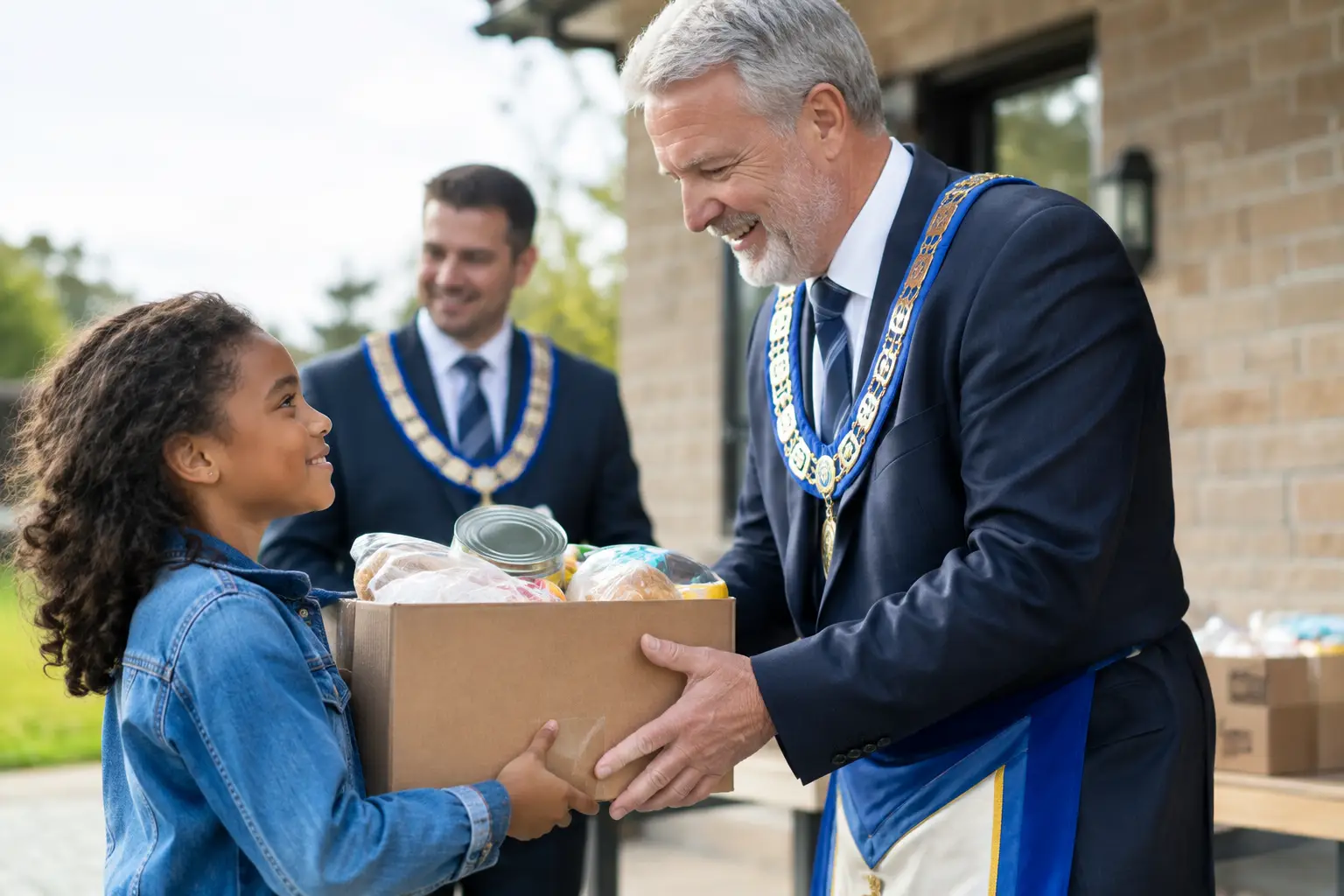
A Masonic meeting may take place behind the doors of a Lodge, but much of its purpose is felt far beyond them. Masonic charity work turns the values of Integrity, Friendship, Respect, and Service into practical help: a grant that keeps a local service running, support for a family after hardship, or volunteers giving time where it is most needed.
For people considering Freemasonry, charity is not an occasional extra. It is one of the clearest ways members put their commitments into action. The form that support takes differs from place to place, but the principle is consistent: people who meet in fellowship can also act together for the good of others.
What Masonic Charity Work Means in Practice
Freemasonry is one of the oldest secular social and charitable organizations in the world. Its charitable tradition has developed over centuries, beginning with support for members, widows, and children, and growing into a wider commitment to communities, health, education, and emergency relief.
That history matters, but it is not simply ceremonial. Lodges today raise funds, identify local needs, and work with charities and community groups that already understand the people they serve. Donations may support medical research, hospice care, youth opportunities, food assistance, veterans, disaster recovery, or projects that reduce isolation. Members also give something that cannot be measured only in dollars: their time, skills, attention, and steady presence.
The work usually happens at several levels. A Lodge may respond quickly to a need in its own town or neighborhood. Regional and national Masonic charities can provide larger grants, specialist support, and coordinated help when an issue reaches beyond one community. This combination allows charity to remain personal while also addressing challenges that require greater resources.
Service Begins With Fellowship
It can be tempting to think of charitable giving as a transaction: money is raised, money is distributed, and the task is complete. Freemasonry takes a broader view. Charity is rooted in relationships and in the belief that character is demonstrated by conduct.
Members learn to work alongside people of different ages, professions, backgrounds, and viewpoints. They organize events, make decisions collectively, manage funds responsibly, and listen to local partners. In doing so, they develop habits that are valuable well beyond the Lodge room – reliability, discretion, generosity, and a willingness to contribute without seeking personal recognition.
This is also why Masonic service can be meaningful for men looking for more than a social calendar. Friendship is central to Lodge life, but friendship gains depth when it is joined to a shared purpose. A fundraiser, community dinner, hospital visit, or volunteer project creates the kind of bonds that come from showing up for others together.
Local Knowledge Makes Giving More Effective
The strongest charitable decisions are not always the most visible. A large national cause may deserve support, but a small organization providing transportation for seniors, equipment for a school program, or emergency supplies for families can have an immediate effect on daily life.
Lodges are well placed to notice these needs because their members live and work in the communities they serve. They may know the teachers, first responders, nonprofit volunteers, and civic leaders who see where help is falling short. That local knowledge can make modest grants highly effective.
At the same time, responsible giving requires care. Good intentions alone do not guarantee good outcomes. Lodges and Masonic charities should consider whether an organization has a clear purpose, sound stewardship, and a realistic plan for using funds. They should also respect the expertise of frontline groups rather than assume that donors always know best.
The right approach depends on the situation. A sudden emergency may call for rapid, flexible assistance. A long-term challenge, such as loneliness or unequal access to opportunity, may require patient partnerships and support over several years. Both forms of giving matter, and both ask members to think beyond a single presentation of a check.
Giving With Dignity
Masonic charity is guided by a simple but demanding standard: help should preserve dignity. People experiencing hardship are not projects or publicity opportunities. They are neighbors, families, and fellow citizens who deserve respect.
This is one reason much Masonic support is given quietly. Public awareness can encourage others to give and can help communities understand what Lodges do. Yet discretion remains important, particularly where personal circumstances are involved. The goal is not to create dependence or claim credit. It is to offer practical assistance in a way that recognizes each person’s worth.
That principle also applies to support within the Masonic community. Freemasonry has a longstanding tradition of caring for members and their families when illness, bereavement, financial pressure, or other difficulties arise. Mutual support is not separate from public charity. It teaches the same lesson: responsibility begins close to home and extends outward.
More Than Fundraising
Fundraising is essential, but it is not the whole story of service. A Lodge can make a difference by lending practical skills, opening a conversation, connecting a community group with useful contacts, or bringing volunteers together around a clear need.
Members may find that the most valuable contribution is not always financial. Someone with experience in accounting may help a local nonprofit improve its processes. A member with event-planning skills may help a small charity reach more supporters. Others may simply provide consistent volunteer time, which many organizations need as much as one-time donations.
This does not mean every Lodge must attempt every kind of project. Overcommitting can exhaust volunteers and dilute impact. It is often wiser to choose a few causes that match local needs, member capacity, and the Lodge’s ability to contribute over time. Service should be sustainable as well as generous.
Why Charity Matters to Those Considering Membership
People approach Freemasonry for many reasons. Some are drawn by its history and traditions. Others seek friendship, structure, personal growth, or a way to participate more fully in their community. Charitable purpose often brings these motivations together.
A prospective member should not join merely to add an item to a résumé or to gain access to a network. Freemasonry asks for a genuine commitment to living its values. But for someone who wants fellowship connected to civic responsibility, the charitable life of a Lodge can be a powerful reason to learn more.
It also offers a practical answer to a common question: what does a Lodge do for its community? The answer will vary, because each Lodge responds to its own setting. Some focus on recurring local partnerships. Others contribute to broader charitable appeals or combine fundraising with hands-on volunteering. What connects them is the intention to make service a regular part of Masonic life, not a once-a-year gesture.
A Tradition That Remains Personal
Three centuries of Masonic history can sound distant until it is seen in a local act of kindness: a community program kept open, a family supported through a difficult week, or volunteers gathered around a shared task. These moments are where tradition becomes relevant.
For Masons, charity is not about having all the answers to society’s problems. It is about refusing to stand apart from them. When people of good character meet in friendship and choose to serve with humility, even a small Lodge can leave a lasting mark on the place it calls home.