

Blog
Do Freemasons Discuss Politics? The Clear Answer

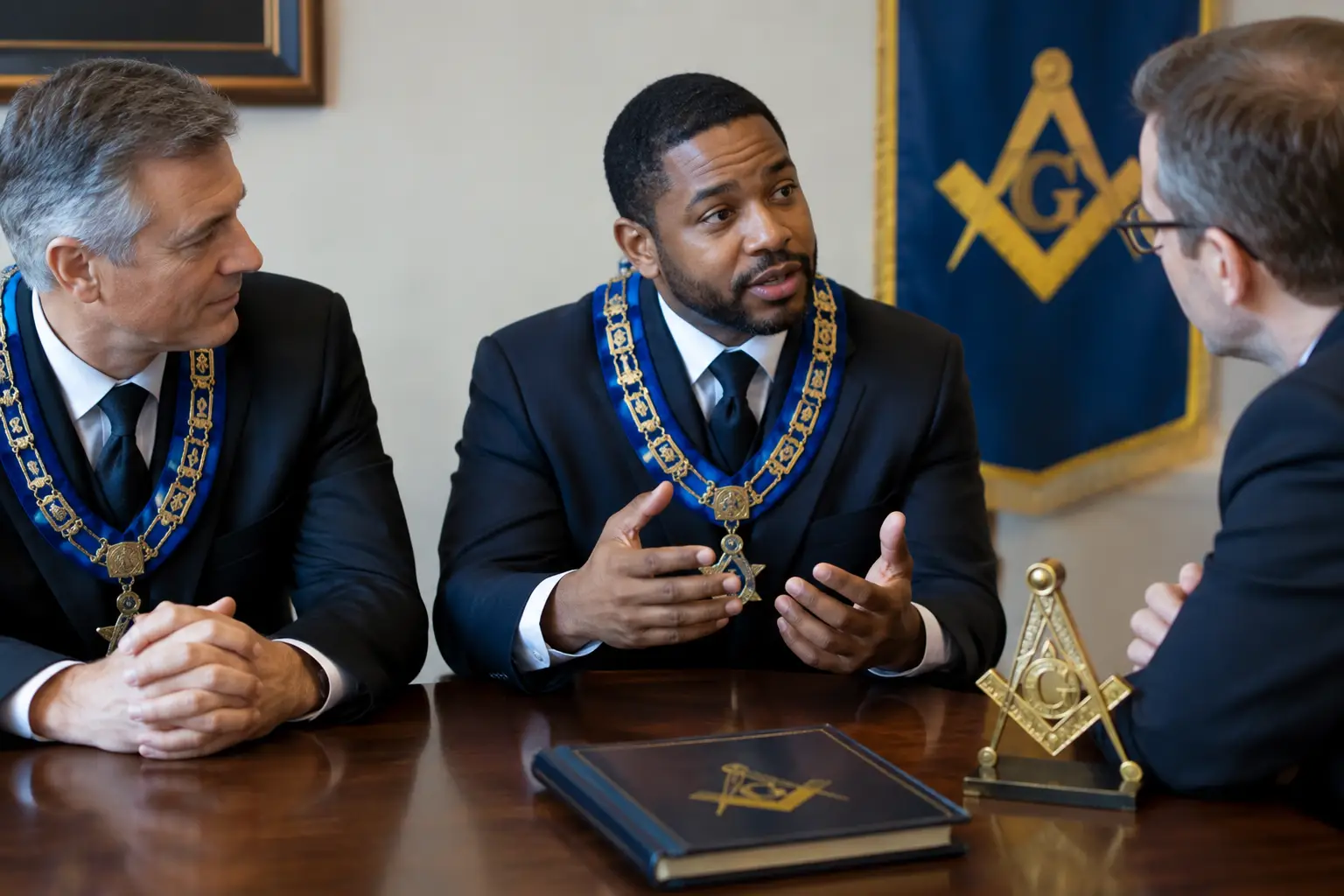
A Lodge brings together men who may hold very different views on elections, public policy, and the issues facing their communities. That diversity is one reason people ask, “do Freemasons discuss politics?” The clear answer is that political debate is not permitted in Lodge meetings. Freemasonry is not a political organization, does not endorse candidates or parties, and does not direct members how to vote.
This is not a request for members to stop caring about public life. Freemasons are citizens, neighbors, volunteers, voters, and community leaders. They may be deeply engaged in civic questions in their own lives. The distinction is that a Lodge is not the place to campaign, argue partisan positions, or recruit others to a political cause.
Do Freemasons Discuss Politics in Lodge?
No. In regular Masonic meetings, politics and religion are traditionally set aside. The purpose of a Lodge is to conduct its business, welcome and support its members, reflect on the moral lessons of Freemasonry, and organize charitable and community activity. Bringing party politics into that setting would distract from those purposes and risk dividing people who have come together in friendship.
The principle has deep roots. Freemasonry has long sought to create a place where men of different backgrounds and convictions can meet on equal terms. Its historic guidance encourages members to be peaceable and law-abiding citizens while avoiding disputes that can disturb harmony within the Lodge.
That approach remains practical. A member may be a committed conservative, liberal, independent, or someone who does not identify with any political party. Around the Lodge room, those labels do not determine a man’s standing. Character, conduct, and willingness to serve matter more.
Rules and customs can differ among Masonic jurisdictions, particularly across the United States. Members should follow the rules of their own Grand Lodge and Lodge. Yet the underlying expectation is widely shared: Masonic meetings should remain nonpartisan and respectful.
Why Freemasonry Keeps Politics Out of Its Meetings
The rule is sometimes misunderstood as indifference. It is better understood as a safeguard for fellowship.
Freemasonry asks members to work together across differences of profession, age, culture, faith, and personal outlook. That is increasingly valuable at a time when many social spaces become polarized quickly. A Lodge offers a different kind of association: one in which people can disagree as citizens without treating one another as opponents.
Political arguments can also create unequal pressure. A newer member may feel reluctant to speak up if senior members are promoting a candidate or cause. A Lodge should never make anyone feel that friendship, advancement, or belonging depends on sharing a particular political view. Keeping political advocacy outside the meeting protects every member’s independence of conscience.
There is a further point of trust. A Masonic Lodge serves its local community through charitable giving, volunteering, and practical support. Those efforts are most effective when they are directed by need rather than party advantage. A food drive, a scholarship, a hospital visit, or a fundraiser should be open-hearted service, not a vehicle for political influence.
What Members Can Discuss Instead
Setting aside politics does not make Lodge conversation shallow. Freemasons talk about their families, work, local history, shared interests, charitable projects, and the everyday challenges of being a good friend and neighbor. They discuss how to support a member who is unwell, how to welcome a candidate, or how to raise funds for a worthwhile local cause.
They also consider the values that shape good citizenship. Integrity, respect, personal responsibility, fairness, and service are not party-political ideas. Freemasonry encourages members to practice them in their homes, workplaces, and communities.
A Lodge may organize events that benefit the public, support disaster relief, or partner with local charitable organizations. It may encourage members to take an active role in their communities. What it does not do is tell them which policy platform, campaign, or candidate should receive their support.
This distinction can feel subtle, but it is important. Discussing the value of helping a neighbor is not the same as debating legislation. Encouraging civic responsibility is not the same as endorsing a political movement. Freemasonry speaks to the kind of person a member seeks to become, not to the ballot he must cast.
What About Conversations Outside the Lodge Room?
Freemasons are individuals, not representatives of a political bloc. Outside a formal meeting, friends may naturally discuss current events just as colleagues or family members do. A dinner after a meeting, a social gathering, or a private conversation can be less formal than the Lodge room.
Even then, good judgment matters. Members are encouraged to preserve the mutual respect that makes Lodge life possible. If a conversation becomes heated or makes others uncomfortable, the courteous response is to change the subject rather than press a point. Friendship should not depend on winning an argument.
It is also wise to avoid presenting a personal political opinion as if it were the view of Freemasonry. There is no Masonic party line. Individual members may hold a wide range of views, and the organization does not speak for them on partisan matters.
Does This Mean Freemasons Cannot Hold Public Office?
No. Freemasonry does not prevent a member from participating in public life, voting, campaigning as a private citizen, or seeking elected office, provided he follows the laws and rules that apply to him. Throughout history, Freemasons have included people from many professions and many forms of public service.
The boundary is organizational rather than personal. A member may pursue a political role, but he should not use the Lodge as a campaign platform or suggest that Freemasonry endorses him. Likewise, a Lodge should not become a venue for candidates seeking access to members or for partisan fundraising.
This protects both the candidate and the Lodge. It allows a member to serve according to his conscience while ensuring that other members remain free to make their own choices without pressure.
Why This Matters to Someone Considering Membership
For many people exploring Freemasonry, the nonpolitical character of Lodge life is reassuring. They may be looking for friendship and service without another arena for ideological conflict. They want to meet people they might never otherwise encounter and build trust through shared effort.
That does not mean every Lodge is identical. The character of a Lodge is shaped by its members, its traditions, and the needs of its community. A prospective member should feel comfortable asking how a Lodge supports charitable work, welcomes new members, and creates a respectful culture. Those questions reveal far more about Masonic life than anyone’s voting preference.
The Masonic Journey exists to make these traditions easier to understand: clear boundaries, genuine fellowship, and a practical commitment to serving others. Freemasonry does not ask men to surrender their beliefs. It asks them to meet one another with courtesy and to place shared purpose above disagreement.
A healthy Lodge leaves room for each member to be an engaged citizen in his own way, then brings him back to a table where friendship, integrity, respect, and service come first.