

Blog
Freemasonry Atheist Membership Explained

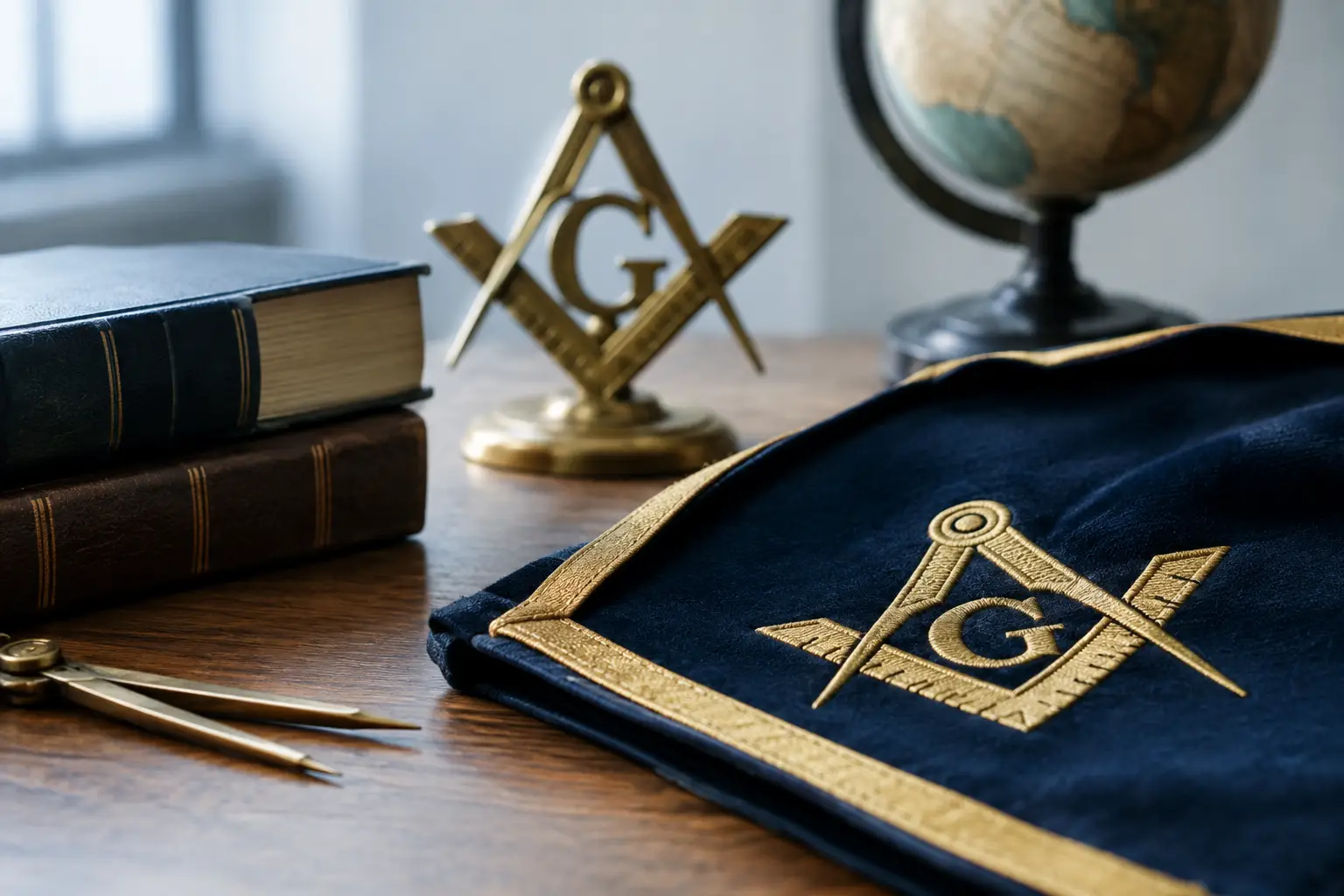
For people considering Freemasonry, atheist membership is often one of the first and most direct questions. The answer within the tradition represented by the United Grand Lodge of England is clear: a candidate must profess a belief in a Supreme Being. Someone who identifies as an atheist would therefore not meet the qualification for membership in a regular Masonic Lodge under this tradition.
That answer deserves context. Freemasonry is not a religion, does not offer a substitute for religious belief, and does not tell members which faith they should follow. Its belief requirement has a specific purpose within a centuries-old moral framework, rather than a desire to judge or rank anyone’s personal convictions.
What the belief requirement means
Freemasonry brings together men of many faiths and backgrounds around shared values: Integrity, Friendship, Respect, and Service. Its ceremonies and promises refer to a Supreme Being, often described in Masonic language as the Great Architect of the Universe. This wording is intended to be broad enough to include men from different religious traditions without placing one faith above another.
The requirement is not an examination of theology. A Lodge does not ask a candidate to defend a denomination, disclose private religious practice, or adopt a particular creed. Each prospective member must simply be able, sincerely and personally, to affirm belief in a Supreme Being.
For that reason, the distinction is not between one religion and another. Christians, Jews, Muslims, Sikhs, Hindus, and men of other faiths may share Lodge membership while retaining their own beliefs. What matters for admission is that the candidate can make the required declaration honestly.
Why Freemasonry has this condition
The principle has deep roots in the history of modern Freemasonry. The 1723 Constitutions established an approach that sought harmony among men who might otherwise be divided by religious or political disagreement. Rather than turning the Lodge into a place for debate about doctrine, Freemasonry asks members to recognize a shared moral responsibility under a higher authority.
This approach also informs the nature of Masonic obligations. A Mason’s promises are made seriously and voluntarily, in a ceremonial setting that reflects reverence, personal accountability, and trust between members. For regular Freemasonry, belief in a Supreme Being is part of the foundation that gives those promises their meaning.
That does not mean Masons claim greater moral character than people who do not share that belief. Integrity, generosity, friendship, and service are demonstrated by people of every worldview. Freemasonry’s membership standard is a condition of participation in its particular tradition, not a verdict on the values or worth of those outside it.
Can an atheist attend a Lodge or learn about Freemasonry?
An atheist who is curious about Freemasonry is welcome to learn about its history, charitable work, architecture, symbolism, and role in community life. Public events, heritage programs, museum visits, and conversations with members can offer a useful and candid introduction. Interest in Freemasonry does not create any obligation to apply, and asking direct questions is entirely reasonable.
A formal Lodge meeting, however, is principally a members’ gathering. Parts of Masonic ritual are private to members, not because they conceal harmful ideas, but because shared ceremony has meaning when it is experienced in the intended setting. Lodges may also hold public dinners, talks, charitable events, or open occasions where guests can meet members and understand more about their work.
For a person who does not meet the belief requirement, those opportunities may still provide a valuable connection to the organization’s heritage and service. Freemasonry has shaped civic life, charitable giving, and local communities for more than three centuries, and that history is open to public interest and serious study.
Freemasonry atheist membership and local differences
Freemasonry is not governed by one worldwide central authority. Grand Lodges are independent bodies, and membership rules can differ among Masonic organizations and jurisdictions. In the United States, most regular Grand Lodges have a belief-in-a-Supreme-Being requirement, but the exact wording and application process may vary.
Some organizations using Masonic traditions may take a different approach to belief or eligibility. They may be mixed-gender, women’s, liberal, or otherwise organized outside regular Freemasonry as recognized by the United Grand Lodge of England and many mainstream Grand Lodges. It is best not to assume that every group describing itself as Masonic follows identical standards.
If you are researching a local organization, ask plain questions: Who is eligible to join? Is belief in a Supreme Being required? Which Grand Lodge or Masonic body does it belong to? A reputable organization should answer clearly, without pressure or ambiguity.
What if you are unsure about your beliefs?
Some prospective candidates do not identify as atheists but are still working through questions of faith, spirituality, or certainty. Freemasonry does not demand a particular label, nor does it expect candidates to have every philosophical question settled. The essential issue is whether a person can honestly affirm the belief required by the Lodge.
Only the individual can answer that question for himself. It should never be treated as a box to check merely to gain admission, please a friend, or access a social network. Masonic membership is built on trust, and a sincere application matters more than a hurried one.
If the answer is uncertain, taking time is the right course. Speak with a member, attend an appropriate public event, read about the values and commitments involved, and consider whether the organization’s framework genuinely fits your convictions. There is no benefit in presenting yourself as someone you are not.
Respecting both conviction and tradition
Questions about belief can feel personal because they are personal. A respectful response recognizes two things at once: atheists and people of no faith deserve the same dignity as anyone else, and Freemasonry has the right to preserve a defining principle of its own membership tradition.
The same spirit of mutual respect helps explain why religion and politics are not debated in Lodge. Members may hold very different convictions, vote differently, worship differently, or not share the same cultural background. Lodge life asks them to meet on common ground, practice good character, support one another, and serve their communities.
For men who meet the membership requirements, that fellowship can become a lasting source of friendship and purpose. For those who do not, the values of service, generosity, learning, and civic responsibility remain available to practice everywhere. A thoughtful question about eligibility is not a closed door to understanding – it can be the beginning of a more honest appreciation of what Freemasonry is and what it asks of its members.